
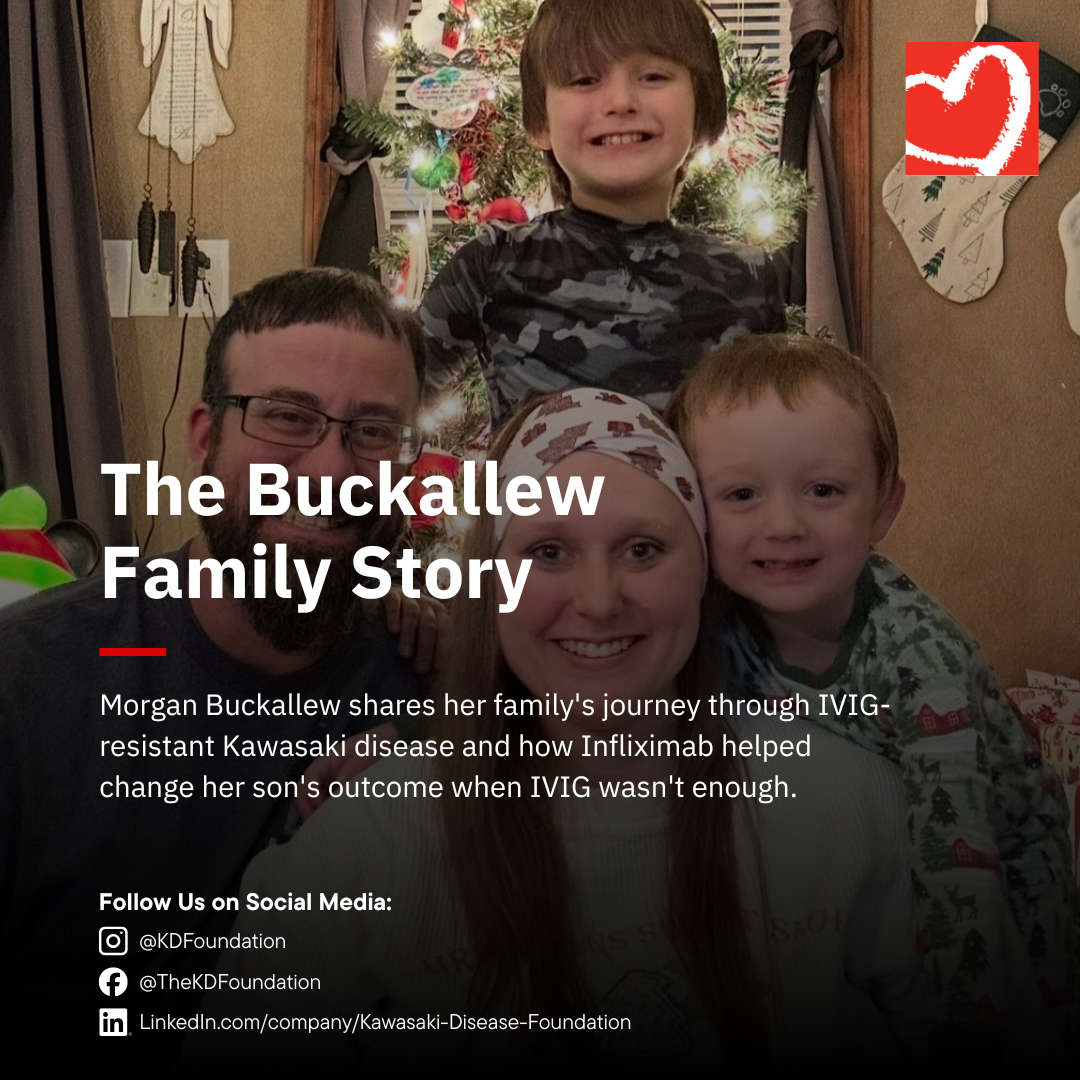
The Buckallew Family Story
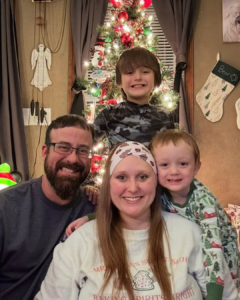 Every parent of a child with Kawasaki Disease remembers the moment the ground shifted beneath them. For Morgan Buckallew, that moment came not once, but twice – first, when her son’s condition failed to respond to the standard treatment, and again eleven days later when they found themselves back in the hospital.
What ultimately saved her son’s life was a medication most parents had never heard of, delivered by a physician who took the time to explain everything.
What is Kawasaki Disease?
Kawasaki Disease (KD) is an acute inflammatory illness and the leading cause of acquired heart disease in children in the United States. It primarily affects children under five years of age, though it can occur in older children as well. The disease causes widespread inflammation of the blood vessels throughout the body – a condition called vasculitis – and if not treated quickly and effectively, it can cause lasting damage to the coronary arteries, the blood vessels that supply the heart.
KD affects approximately 5,000 to 6,000 children in the U.S. each year. The cause remains unknown, though researchers believe a combination of genetic predisposition and an environmental or infectious trigger may be responsible. It is not contagious.
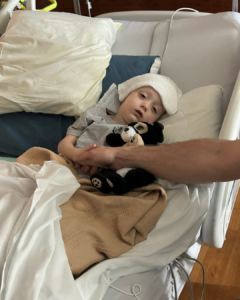 The classic symptoms include a persistent fever lasting five or more days, a skin rash usually on the torso, redness of the eyes without discharge, changes to the lips and the mouth – such as cracked lips or a “strawberry tongue” – swollen lymph nodes in the neck, and redness or swelling of the hands and feet. Because these symptoms can resemble more common illnesses, diagnosis is often delayed, and that delay can have serious consequences.
When diagnosed promptly and treated effectively, most children recover fully. But for a subset of patients – doctors estimate about 10 to 20 percent – standard treatment doesn’t work, and that is where stories like the Buckallews’ story begin.
When Standard Treatment Falls Short
The first-line treatment for Kawasaki Disease is intravenous immunoglobulin, known as IVIG – a blood product derived from donated human plasma – administered in a high-dose infusion with aspirin. When given during the acute phase of the illness, IVIG can dramatically reduce the risk of coronary artery complications, bringing the rate of aneurysm development down from roughly 25% to 5% in responsive patients.
But in approximately 10 to 20 percent of KD cases, the fever persists, and the inflammation continues despite IVIG. These children are classified as IVIG-resistant, and they require additional treatments.
Morgan’s son was one of these children. After receiving his IVIG infusion, an echocardiogram two days later showed that his heart had worsened. In hindsight, Morgan now knows this finding should have resulted in an immediate transfer to a children’s hospital and the initiation of a secondary treatment. Instead, they were sent home.
“He should have been transferred to the children’s hospital and given Infliximab,” Morgan reflects. “Instead, he was sent home, and 11 days later, we were back in the hospital.”
What Is Infliximab – and Why Does It Help with Kawasaki Disease?
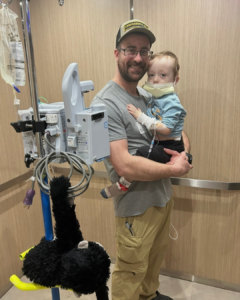
When Morgan’s son was readmitted to the hospital, a rheumatologist sat down with the family for over an hour. Morgan was informed of the next steps, which included the recommendation of the use of Infliximab – and Morgan’s first reaction was that of surprise.
“I found it very interesting that a medication that treats Crohn’s Disease would also help save my son,” she says.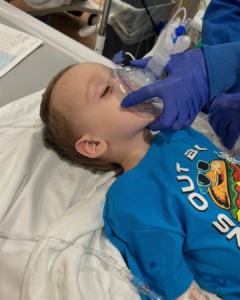
Infliximab is a biologic medication – a type of drug derived from living cells – that was originally developed to treat inflammatory autoimmune conditions such as Crohn’s Disease, rheumatoid arthritis, and psoriasis. It works by targeting and neutralizing a specific protein in the body called tumor necrosis factor-alpha, or TNF-α.
By blocking TNF-α, Infliximab interrupts the “inflammatory cascade”. In IVIG-resistant KD patients, it has been shown to reduce fever, lower inflammatory markers, and in many cases, prevent or limit further coronary artery damage.
The rheumatologist who treated Morgan’s son was transparent about one particular concern: a very small chance of increased cancer risk later in life, associated with long-term use of TNF-blocking medications. This is a known consideration among patients who receive biologics, and it is something families should discuss openly with their medical team. For Morgan, the reward far outweighed the risk of the medication, and they chose to move forward with treatment.
A Medication That Changed Everything
After receiving Infliximab followed by a five-day course of steroids, Morgan’s son underwent a CT angiogram – an imaging study that evaluates the coronary arteries in detail. Doctors were pleased with the results.
“The aneurysms in his coronary artery had resolved,” Morgan says. “The dilation was gone.”
 Coronary artery aneurysms – outward bulges in the arteries caused by sustained inflammation – are the most feared long-term complication of Kawasaki Disease. In the most serious cases, they can persist for decades, requiring lifelong anticoagulation therapy and ongoing cardiac monitoring. Resolution is the best possible outcome, and it is not guaranteed.
Morgan’s son continues to be monitored closely. He receives echocardiograms and EKGs every three months. He will take a daily aspirin for the rest of his life, which is a common recommendation for children who have had coronary artery involvement with KD, as aspirin helps prevent clotting.
“We are grateful,” Morgan says simply. “I wholeheartedly believe our son would have died without this medication. I’m forever thankful for it.”
What Other Families Should Learn From Morgan’s Experience
There are multiple takeaways from Morgan’s experience – lessons for parents, for pediatricians, and for the broader healthcare community.
The first is about timing. When a child’s echocardiogram shows worsening cardiac involvement after IVIG, that is a signal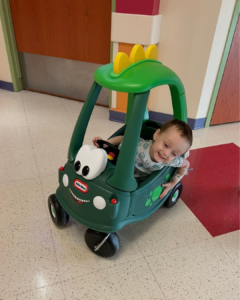 that demands escalation of care. The inflammation in KD does not pause, and every day of uncontrolled disease activity is a day during which coronary damage can progress.
The second is about communication. Morgan credits the rheumatologist at the children’s hospital with making the difference not just medically, but emotionally. When a family understands why a treatment is being given, what it does, and what to expect, they can engage as true partners in care rather than passive recipients of decisions being made around them.
The third is about hope. Infliximab is not a household name. Most parents of children newly diagnosed with KD have never heard of it. But for families whose children do not respond to IVIG, it exists – and for some of those children, it is lifesaving.
To learn more about the Kawasaki Disease Foundation, Infliximab, and available resources for families, visit the Kawasaki Disease Foundation at kdfoundation.org.